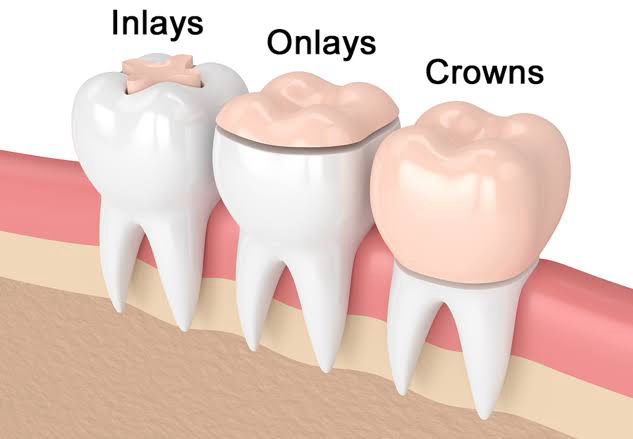
Type of Restoration that are performed to rehabilitate the decayed, fractured or cracked teeth located in the rear are called inlays and onlays.
They are also known as indirect fillings and are sometimes used as conservative alternatives to full coverage dental crowns.
Inlays and onlays are long-lasting reparative solutions that successfully re-establish aesthetics and functionality of the damaged tooth.
They fit well, are strong and a widely chosen alternative to traditional fillings.
Tooth decay and structural damage are repaired with inlays and onlays fabricated in a dental laboratory and then bonded to the damaged tooth.
Benefits of inlays and onlays:
Inlays and Onlays are conservative preparations that are bound to offer a better fit and preserve most of the healthy tooth
They are one of the best alternatives to full coverage crowns
It comes with assured aesthetic longevity and do not discolor like resin fillings
Tooth structure is safeguarded in addition to restoring damaged and decayed areas
Functional endurance is guaranteed
Inlays seal the space between teeth tightly avoiding bacterial formations
For a tooth that has already undergone root canal therapy:
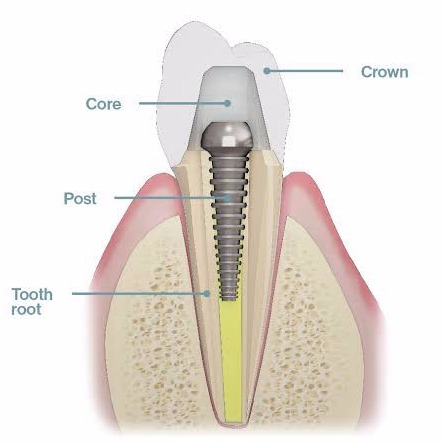
Post and core procedures are done to anchor a crown or stabilize weakened tooth. When tooth structure is inadequate to reinforce a conventional restoration then a small rod or post is inserted into the root space with a few millimeters of protrusion.
The posts are placed and cemented using a composite resin which is also used to build-up the core.
The missing coronal tooth structure is replaced sufficiently to restore full functionality and aesthetics of the tooth.
A final preparation is done for the placement of the crown.
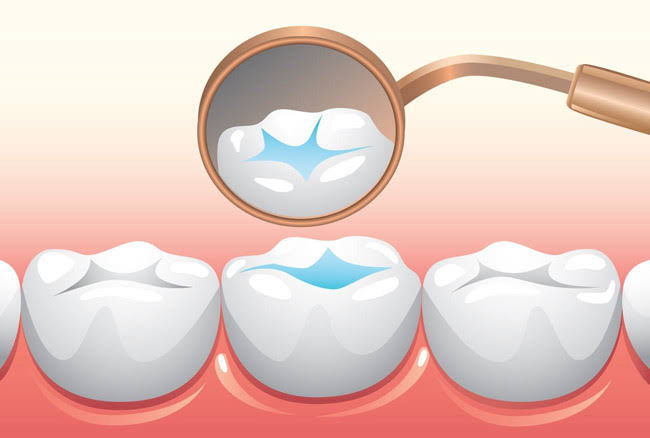
Tooth decay is a common oral problem and most of the adults between the ages of 20 and 64 years suffer from tooth decay. The chewing surfaces of the teeth develop deep grooves called pits and fissures. They are found on the molars and premolars. The cavities in the molars are deeper than in the premolars. Improper Brushing technique may not be able to remove the food particles stuck in these areas and causes a cavity. A narrowed morphology provides the perfect space for the development of caries. Molars are the first set of permanent teeth and are the most susceptible set of teeth to occlusal caries.
Sealing pits and fissures are an effective way of treating them. The area is sealed off against the entry of bacteria and debris thus preventing dental caries.
Pits and fissures if left untreated will lead to pain, loss of tooth and infection. Due to their inability to be cleaned, they grow rapidly and are one of the leading causes of cavities. Pits and fissures have the capacity to spread rapidly due to which it is always advisable to treat it as soon as it is diagnosed.
Advance Dental Care and Implant Centre use the latest diagnosis and preconditioning techniques for pits and fissures.